omaha poker
damdari.net-Omaha is one of those card games where a “tiny” tweak can feel like a new universe. Add one extra hole card, split the pot into high and low, or reveal a community card early, and suddenly the same board produces completely different decisions. That’s why learning the variant of omaha poker you’re playing matters more than memorizing any single “best move.”
At the center of all these versions is one rule that stays stubbornly consistent: in standard Omaha, you build your final hand using exactly two of your hole cards and exactly three community cards—no more, no less.
The baseline: “Omaha High” (4 cards, high hand only)
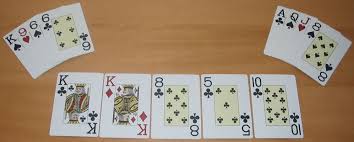
Classic Omaha (often called Omaha High) deals each player four private cards and uses five community cards, like Texas Hold’em. The difference is the hand-building rule: you can’t use one hole card, and you can’t “play the board.” It must be two from your hand plus three from the board.
That constraint is why beginners misread hands at first. A board that looks like an obvious straight or flush doesn’t automatically give it to everyone. You still need the right two-card pairing in your hand to claim it.
Pot-Limit Omaha (PLO): same cards, a different pressure system
Pot-Limit Omaha—usually shortened to PLO—keeps the 4-card structure but changes how bets can grow: the maximum bet/raise is tied to the current pot size. PLO is widely played as a high-only game in many places, and it’s known for creating big draws and frequent “near-misses,” because four hole cards generate more combinations than Hold’em.
A practical way to understand PLO: it rewards patience and “nut” thinking (the best possible version of a hand), because second-best straights and flushes get people into trouble more often than they expect.
Omaha Hi-Lo (Omaha/8): one board, two winners
The most important structural twist is Omaha Hi-Lo split-8 or better, often written as Omaha/8. Here, the pot is split between:
-
the best high hand (normal poker ranking), and
-
the best qualifying low hand (eight-high or lower, using ace-to-five low rules).
Two details define the feel of Omaha/8:
-
A low hand must qualify (8-high or better); if nobody qualifies, the high hand wins the whole pot.
-
You can use different hole cards for high and low, but you still must follow the “two from hand, three from board” rule.
This is why experienced players talk about “scooping”: winning both high and low in the same hand. It’s not just about strength—it’s about aligning your hand with the board in two directions.
Five-card Omaha (“Big O”): one extra card, a lot more chaos
Five-card Omaha deals five hole cards instead of four, while keeping the same community board and the same requirement to use exactly two hole cards.
You’ll often hear the nickname “Big O.” The term is commonly used for five-card Omaha (and in many card rooms it’s especially associated with the Hi-Lo version), but the safest approach is to confirm the house format: high-only or hi-lo, and whether it’s pot-limit.
Why the extra card matters: more hole cards means more draws collide on the same board. You’ll see stronger hands more often, and “almost” hands (like non-nut flushes) become even more fragile.
Six-card Omaha (6-O): more combinations, more board collisions
Six-card Omaha extends the same idea again: six hole cards, still use exactly two of them. Wikipedia notes 6-O as a commonly found Omaha variation in some markets.
The learning curve here is mostly mental: with that many possibilities, it’s easier to overvalue pretty-looking hands and harder to accurately guess what opponents can show up with by the river. The board becomes a shared battleground of overlapping draws.
Courchevel: the variant that shows you a community card early
Courchevel changes the order of information. Players get five hole cards, and then one community card is revealed immediately before the first betting round. After that, the rest of the flop appears, and the hand proceeds like standard Omaha (still using exactly two hole cards).
That early community card makes pre-flop decisions feel less blind. It also creates sharper conflicts: people commit earlier because they already see a piece of the board texture.
Courchevel is also played in a Hi-Lo form (8-or-better qualifier), which splits the pot like Omaha/8.
The rule that causes the most mistakes
Across these formats, the biggest recurring error is forgetting the “exactly two” requirement. Players coming from Texas Hold’em instinctively try to use one hole card with four board cards, or assume the board gives them a made hand. Standard Omaha doesn’t allow that
If you want one habit that travels across every Omaha format: at showdown, physically point to the two hole cards you’re using, then point to the three board cards you’re using. It prevents misreads and arguments.
A subtle “home game” insight beginners miss
In casual play—friends, snacks, chatter—people treat Omaha like “more cards = more chances,” so they play too many starting hands and chase too far. The better mindset is the opposite: more cards means more opponents can make strong hands too. The game often rewards restraint, especially when the board makes the nuts plausible for multiple players.
A omaha poker is usually just one rule change—betting structure, hole-card count, split pots, or the order of community cards—but that one change reshapes everything about how hands develop. If you remember the constant (two from hand, three from board) and learn what the variant changes, you’ll read situations faster and make fewer costly misreads.
About the Author